

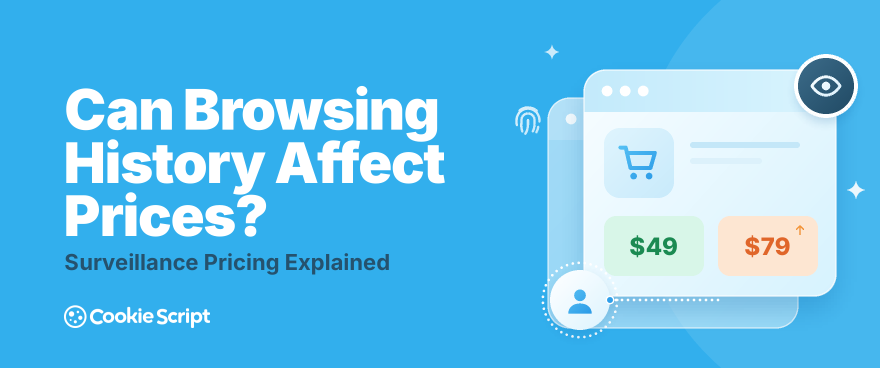
Have you ever searched for a product online, remembered the price, and then returned to the same website later to find the price had changed?
While prices can fluctuate for many reasons, your browsing history and online behavior can also influence it.
Businesses increasingly use consumer data to personalize shopping experiences, recommend products, and deliver targeted offers. But some companies also use browsing history to increase prices or change discounts consumers see. This practice, known as surveillance pricing, raises important questions about online privacy, transparency, and fairness.
Personal Information and online behavior could affect pricing, but customers not always realize it.
So, let's explore how surveillance pricing works, what information companies may collect, and how you can protect yourself.
What Is Surveillance Pricing and How Does Your Browsing History Affect Prices?
Surveillance pricing is a practice in which businesses use Personal Information and consumer behavior to influence the prices, discounts, or promotions individuals receive. Usually, businesses use cookies, browsing history, and other individual trackers to detect returning customers.
Unlike traditional pricing, where all visitors see the same advertised price, surveillance pricing lets companies offer different prices or deals to different customers based on their personal data and online behavior.
How browsing history can influence online prices
Your browsing history can reveal valuable information about your interests, preferences, and purchasing intentions. Businesses use cookies, tracking pixels, account data, and other technologies to collect your browsing history, needed for surveillance pricing.
When you visit websites, search for products, or interact with online advertisements, businesses may collect information about your activities. This information can help companies estimate:
- Customer interests: Which products or services interest you.
- Product preferences: Which brands, categories, and features interest you.
- Purchase intent: How likely you are to buy a particular product.
- Price sensitivity: Whether you frequently compare prices or wait for discounts.
- Shopping habits: How often you browse, purchase, or abandon your shopping cart.
Businesses can use this information to personalize product recommendations, promotional offers, or change prices.
What makes surveillance pricing different from dynamic pricing?
Both surveillance pricing and dynamic pricing adjust pricing of products or services based on external information. Dynamic pricing generally responds to market conditions, while surveillance pricing uses personal information to adjust pricing.
Dynamic pricing adjusts prices based on broader market conditions, such as demand, availability, competition, or time of purchase. For example, hotel prices may increase during a major festival because more travelers are booking rooms.
Surveillance pricing, on the other hand, uses information about a particular individual to personalize pricing decisions. For example, when a customer repeatedly checks the site for flights on a particular date from the same device, an airline could show them a higher, individualized ticket price compared to another user.
The distinction between surveillance pricing and dynamic pricing matters because online activity can influence the offers customers receive.
How Companies Use Browsing History, Cookies, and Personal Data to Set Prices
Companies track users’ online activity through cookies, analyzing their shopping behavior and search history, collect location and device information, and use AI to personalize offers and discounts instead of base prices.
Modern websites can collect a lot of information about visitors and learn their browsing, search, and shopping habits. Usually, websites use several methods to track users; sometimes they combine several methods to get more detailed information.
The methods to collect personal information, needed for surveillance pricing, include:
1. Tracking online activity through cookies
Cookies are small JavaScript files that websites set on users’ devices to remember information about individuals. They can help websites keep you signed in, remember items in your shopping cart, and save your preferences.
However, Tracking Cookies can also collect information about which pages you visit, what products you view, and how you interact with online content.
Combined with other data, these details may help businesses build profiles of individual shoppers and offer tailored pricing.
Note that cookies do not automatically increase prices. They only collect information about potential customers, which is used by websites to influence pricing.
2. Analyzing your shopping and search history
Your previous purchases, product searches, and browsing patterns can reveal what product categories you are interested in buying.
Algorithms can then identify patterns and group shoppers according to their likely purchasing behavior.
For instance, a customer who regularly purchases premium products might receive different product recommendations or promotional offers than someone who consistently searches for budget-friendly alternatives.
3. Using location and device information
Businesses may also collect or infer information from your IP address, geographic location, device type, browser settings, or account details.
Location can be particularly useful because it may indicate regional demand, local competition, or differences in consumers' purchasing behavior.
Retailers generally combine location information with other information, such as shopping activity or search history, to personalize an offer.
However, price differences across locations may also reflect ordinary factors such as taxes, delivery costs, or local operating expenses.
4. Using AI and algorithms to personalize offers
Nowadays businesses use artificial intelligence and machine learning to analyze large amounts of customer data and offer personalized promotions.
Algorithms may identify patterns that would be difficult to detect manually, such as which shoppers are likely to respond to a discount or which products customers are most interested in purchasing.
The FTC's January 2025 study examined companies providing technologies that use AI to analyze detailed consumer information to tailor pricing and promotions. The research found that retailers often use customers’ personal information to set targeted, tailored prices for goods and services. The collected information includes a person's location, demographics, browsing patterns, shopping history, and even their mouse movements on a webpage.
5. Personalizing discounts instead of base prices
Surveillance pricing does not always involve changing a product's advertised price.
Sometimes, businesses keep the base price unchanged but offer different customers different discounts. One shopper might receive a 10% discount, while another receives a 20% discount, based on their shopping activity. Although both customers initially see the same price, they ultimately pay different amounts.
Why surveillance pricing raises privacy concerns
Surveillance pricing affects prices directly. In addition to that, there are also privacy issues, such as collection of personal information, reduced price transparency, and unfair treatment.
Potential concerns could include many issues:
- Limited transparency
Customers may not know when personal information influences pricing. People usually have limited ability to understand or influence how their data is used. - Privacy risks
Companies may collect or combine more behavioral data than consumers expect, which could also be used for other purposes. - Unfair treatment
Some customer groups could systematically receive less favorable offers. - Reduced price transparency
Personalized promotions may make it harder to compare deals fairly.
How to Protect Your Privacy and Avoid Personalized Pricing Online
Not all companies use surveillance pricing, and you cannot know which ones use this pricing model. However, you can take practical steps to reduce online tracking and make more informed purchasing decisions. These strategies can help you protect your browsing data, compare prices more effectively, and potentially reduce the influence of personalized marketing.
1. Clear your browsing history and cookies regularly
Cookies let websites recognize returning visitors and remember past shopping activity or search history. Clearing your browsing history and cookies can reduce tracking by removing some of the information websites store in your browser.
To clear your browsing data:
- Open your browser's settings.
- Find the Privacy and Security section.
- Select the option to clear browsing data.
- Choose cookies, site data, and browsing history.
- Confirm your selection.
Keep in mind that clearing your browsing history will not remove all information about you and your online activity since some information is already stored by retailers, advertisers, or data brokers.
Not sure if your website uses cookies? Scan your website for free and see what cookies, including Third-Party Cookies, your website uses:
2. Use private or incognito browsing mode
Private browsing mode can be useful when comparing product prices when you don’t want the websites to track you and classify you as a returning visitor. Private or incognito browsing mode generally prevent your browser from saving browsing history and persistent cookies after you end the private session.
Most major browsers offer a private browsing feature.
However, incognito mode does not make you anonymous online. Websites may still identify you through your IP address, account login, or other tracking methods. So, it does not guarantee that you will receive a lower price.
3. Compare prices across multiple websites
One of the most effective ways to avoid spending more due to personalized pricing is to compare prices before completing a purchase.
Instead of selecting the first offer you see, check the same product across different retailers. You can also use price comparison websites and price history tools to determine whether the price is competitive or you are overpaying.
Comparing offers helps you make better purchasing decisions regardless of whether a website uses personalized pricing or not.
4. Limit Third-Party Cookies and online tracking
You can block third-party cookies and enable tracking protection to reduce unnecessary tracking. It will protect against the collection and sharing of your personal information, so companies cannot track you consistently and build detailed profiles of your browsing behavior.
Many browsers provide privacy settings that can reduce tracking across websites. You can also use reputable privacy-focused browser extensions that block certain advertising cookies.
Read more about how to block third-party cookies.
5. Don’t depend too much on shopping accounts and loyalty programs
Shopping accounts and loyalty programs can provide convenient benefits, including exclusive discounts, rewards, and personalized product offers.
However, they may also allow retailers to collect much information about your online activity, know your browsing history and habits, and build a persistent customer profile.
Before signing up for a loyalty program, review its Privacy Policy and check what information it collects and shares.
You can also compare prices while signed in and signed out to see whether a website displays different offers.
6. Review your privacy settings
Many websites and applications allow users to manage certain advertising and personalization preferences.
To avoid personalized pricing, check settings related to personalized advertisements, marketing cookies, location sharing, and data collection.
Where possible, disable tracking features that are not necessary for the services you use.
7. Focus on the final price before purchasing
A personalized discount is not necessarily the best deal available. Rather than relying on promotional messages such as "Exclusive Offer", compare the actual price the business offers and any available alternatives before purchasing.
The final price includes the product's base price, shipping costs, taxes, and service fees.
Even if a loyalty program offers a discounted price, the final price could be cheaper using an alternative retailer.
Conclusion: Can Your Browsing History Really Change Prices?
Yes, browsing history can influence the prices, promotions, and discounts consumers see online. Surveillance pricing could be used not only to change or increase pricing, but also to deliver personalized advertisements, product recommendations, and influence purchasing decisions.
As businesses adopt sophisticated data analytics and AI-powered pricing tools, understanding how online tracking works and which personal data you are sharing with businesses is becoming increasingly important.
By managing your browsing history, limiting third-party cookies and unnecessary data sharing, and comparing prices across retailers, you can protect your privacy and avoid the disadvantages of surveillance pricing.
However, price fluctuations do not mean every retailer uses surveillance pricing or that repeatedly viewing a product will automatically increase its price. Price changes can also result from demand, availability, or other market factors.
Frequently Asked Questions
Can your browsing history affect the prices you see online?
Yes, your browsing history can potentially influence the prices, discounts, and promotions you see online. Some companies use Tracking Cookies, search history, shopping behavior, and personal data to personalize offers through surveillance pricing. However, not all retailers use this practice, and price changes can also result from demand, availability, shipping costs, taxes, or other market factors.
What is surveillance pricing and how does it work?
Surveillance pricing is a strategy where businesses use consumer data, such as browsing history, location, purchase history, and online activity, to personalize prices, offers, or discounts. Companies may use artificial intelligence to analyze shopping habits and build a consumer profile, that is used to estimate how much customers are willing to pay. Thus, consumers could receive different offers for the same product or service.
How to protect my browsing history and avoid surveillance pricing?
You can reduce online tracking by regularly clearing cookies, browsing history, using private or incognito browsing, blocking third-party trackers, adjusting browser privacy settings, and limiting data sharing through loyalty programs. Comparing prices across multiple websites and checking offers while signed out of shopping accounts can also help you find better deals.