Which Marketing Tools Create the Highest Litigation Risk?
Read about marketing tools litigation risk to learn which marketing tools create the highest litigation risk and how marketing tools expose businesses to lawsuits.

 Cookie Script
Make your website compliant with GDPR
Cookie Script
Make your website compliant with GDPR
Read about marketing tools litigation risk to learn which marketing tools create the highest litigation risk and how marketing tools expose businesses to lawsuits.
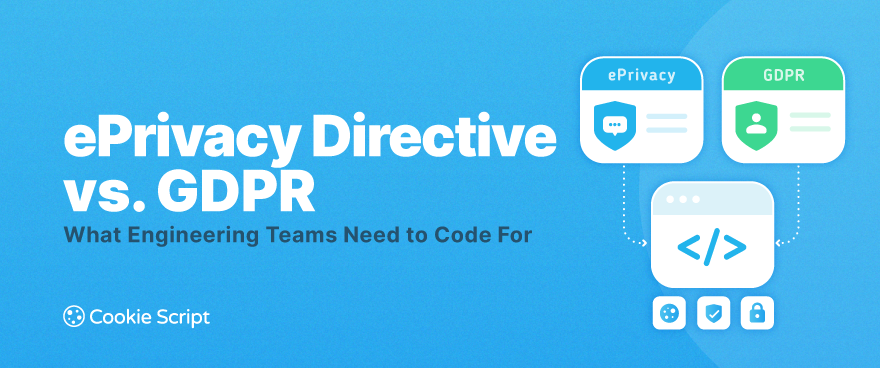
A developer adds a tracking tag through Google Tag Manager and ships it. The tag does two things almost simultaneously: it touches the visitor's browser—sets a cookie or reads one back—and it starts sending data about that person to a third party. Those actions answer to different laws, and treating them as a single "GDPR Cookie Consent" problem is how gaps get built into a site without anyone noticing.
Cookie banners are easy to see. What happens behind them is harder to spot. A banner may look normal while an advertising pixel loads before a visitor makes a choice, or while a newly installed ecommerce app adds trackers the banner was never configured to handle.
Copying a competitor’s Cookie Banner can feel like a harmless shortcut. Their website looks polished, their legal pages sound serious, and the banner seems to cover the usual choices: accept, reject, manage preferences. Copying it anyway would be a mistake.
School and EdTech privacy risk does not only sit inside student databases, learning platforms, or internal school records. It can also start on public website pages, through cookies, pixels, analytics tags, embedded videos, ad tools, forms, student portals, and third-party scripts.
Website builder Cookie Consent comparison: read this blog to learn more about Wix vs Webflow vs Shopify Cookie Consent and how each website builder handles cookie consent setup.
Businesses are building Custom GPTs quickly. Support helpers, sales assistants, policy explainers, onboarding bots, internal knowledge tools — all useful, all easy to launch, and all capable of handling more information than teams sometimes realize. The first privacy question is usually, “Will AI train on our data?” Fair question. But it is not the whole risk.
The Digital Omnibus proposal sets new rules for contextual advertising, ad measurement, and reporting. Read this blog to learn what impact it would have on publishers, advertisers, and ad tech vendors.
Read about media and publishing consent management to learn about Global Privacy Control for media websites, GPC signals for publishers, and ad tech consent.
opt-out consent means a business starts a certain type of data use or marketing activity unless the person says no. That sounds simple, but the legal rules behind are far from it. opt-out is a way to give people control. In others, especially with non-essential cookies in the EU and UK, businesses usually need opt-in consent first. That is why the term causes confusion.
Read the top 10 Google Consent Mode v2 mistakes, common Consent Mode v2 errors during Consent Mode v2 implementation, and learn tips for Google Consent Mode v2 troubleshooting.
Read about biometric privacy laws, neural data regulation, multi-state consent requirements for biometric data, and learn how to reach biometric and neural data compliance.
The deadline to comply with the EU AI Act is August 2, 2026. Read about the EU AI Act requirements for HR tech, AI compliance for HR platforms, and how to map your HR AI systems before the deadline.
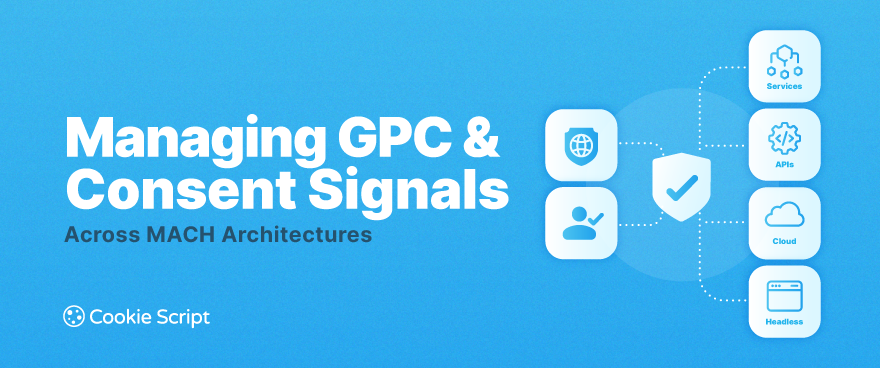
MACH architecture, used in composable commerce, still needs consent management. Read the blog to learn how GPC works with composable commerce, how consent signals move across microservices, and how to manage Cookie Consent in MACH architecture.

Read GDPR compliance requirements for travel & hospitality and learn how to protect and how to stay compliant across multiple regions and markets.
Education platforms and student privacy compliance: read about GDPR student data requirements, COPPA requirements for schools, Cookie Consent for schools, and education website privacy compliance.
What is zero-trust data sovereignty in consent management? Read why traditional consent logs fail modern privacy requirements, the benefits of client-side encrypted consent logs, and how CMPs can implement zero-trust data sovereignty.
What is consent debugging? Read about the consent debugging toolkit for CMP debugging and consent debugging across browsers and devices.
Does GDPR apply to B2B (Business-to-Business) data? When does B2B data become personal data? Do B2B websites need cookie banners? Read the blog to learn the real difference between B2B vs. B2C privacy.
What is AI.txt? What is LLMS.txt? Read this blog article about robots.txt alternatives, compare AI.txt vs. robots.txt, LLMS.txt vs. robots.txt, and learn how to block AI crawlers on your site using purpose-based scraping.
Finance and fintech websites handle sensitive personal data. Read the blog to learn how to handle Cookie Consent amid strict privacy regulations.
Does ChatGPT use cookies? What data do ChatGPT cookies collect? How to block or control ChatGPT cookies? Read this blog to know more about ChatGPT cookies and learn how to make your website ChatGPT cookie-compliant.
Do Kajabi, Teachable, and Thinkific use cookies? How to make your course website cookie compliant? Read the guide on how to reach cookie compliance for course creators.
Substack & Beehiiv use cookies and email tracking pixels to track users and newsletter open rates. In 2026, regulators actively check whether Substack & Beehiiv have consent to track users. Read this guide to learn whether newsletters need cookie banners.
Read the guide to learn how to handle real estate lead generation and to reach real estate website compliance. Contact form compliance is a must, not a voluntary choice.
Dropshipping is not illegal in 2026. What gets stores into trouble is everything around it: unrealistic shipping promises, messy returns, unsafe products, surprise duties, and tracking setups that ignore privacy rules. That is the real compliance problem.
Is Squarespace’s native banner GDPR compliant in 2026? Do you have to disable Squarespace Cookie Banner for Google Consent Mode? Read this blog to learn how to disable Squarespace’s built-in banner and implement Google Consent Mode on Squarespace using a CMP.
Keeping a vendor list aligned with what is actually running on a website can take regular manual checks. Advertising vendors change, website setups change, and without updates, the vendor list can fall out of sync with the technologies detected on the site.
AI is baked into most products now — support chat, recommendations, even the “smart” bits in analytics. The awkward part is that the data you’d love to train on is often the same data privacy laws care about most.

Read the blog to know what counts as sensitive data in FinTech and loan apps, how to secure sensitive financial data, and what are the most common compliance mistakes FinTech and loan apps still make.
What is the difference between traditional WordPress and headless WordPress? Read the guide to learn how to implement CookieScript with Next.js or Gatsby.
This article explains more about headless CMS compliance and shows how to integrate CookieScript code into your frontend application (Contentful & Strapi), how to configure cookie blocking, and how to comply with data privacy laws.

Global Privacy Control provides an automated way for internet users to opt out of tracking. privacy laws require honoring GPC. Read this blog to learn how to test GPC signals in GTM.
Is AI content labeling mandatory in 2026? Who must label AI-generated content, when to label it, and how to label it? Does labeling AI content affect rankings? Read this blog to find answers to these questions.
The EU's Digital Markets Act (DMA) set strict requirements for marketing. As a result, Google offered Google Consent Mode v2 for users, serving ads in Europe. Read this blog to learn how it impacts marketing revenue.
Why block AI crawlers? Does blocking AI scrapers affect my Google search rankings? How effective is robots.txt at blocking AI scrapers? Read this blog article to learn more about AI scrapers.

What is WCAG, and does it apply to cookie banners? Are Web Content Accessibility Guidelines legally required for cookie banners? Read the 2026 compliance checklist for WCAG 2.2.
Why consent UX matters? Read about UX patterns for high consent rates that are still legal and practical tips for designing effective Cookie Consent banners.

How do Flutter and React Native differ when handling user data privacy? What’s the best way to implement GDPR-compliant consent in a mobile app? Read this guide to understand privacy implementation requirements for cross-platform mobile apps.
How to reach cookie compliance for Bubble.io & Webflow Apps? Do you need a Cookie Policy for no-code apps? Read this practical 2025 guide to comply with privacy laws.
CookieScript helps to make the website ePrivacy and GDPR compliant.
We have all the necessary tools to comply with the latest privacy policy regulations: third-party script management, consent recording, monthly website scans, automatic cookie categorization, cookie declaration automatic update, translations to 34 languages, and much more.