Keeping a vendor list aligned with what is actually running on a website can take regular manual checks. Advertising vendors change, website setups change, and without updates, the vendor list can fall out of sync with the technologies detected on the site.

 Cookie Script
Make your website compliant with GDPR
Cookie Script
Make your website compliant with GDPR
Step-by-step help to master cookie compliance
Guides
Consent for AI Training Data
AI is baked into most products now — support chat, recommendations, even the “smart” bits in analytics. The awkward part is that the data you’d love to train on is often the same data privacy laws care about most.

FinTech & Loan Apps: Handling Sensitive Data in 2026
Read the blog to know what counts as sensitive data in FinTech and loan apps, how to secure sensitive financial data, and what are the most common compliance mistakes FinTech and loan apps still make.
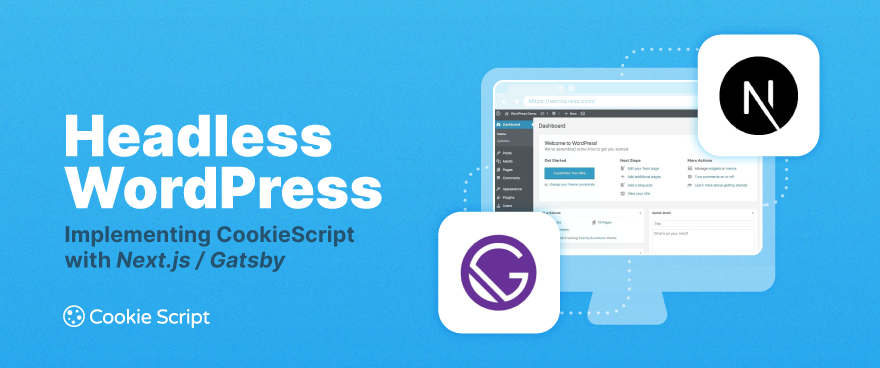
Headless WordPress: Implementing CookieScript with Next.js/Gatsby
What is the difference between traditional WordPress and headless WordPress? Read the guide to learn how to implement CookieScript with Next.js or Gatsby.
Headless CMS Compliance: Using CookieScript with Contentful & Strapi
This article explains more about headless CMS compliance and shows how to integrate CookieScript code into your frontend application (Contentful & Strapi), how to configure cookie blocking, and how to comply with data privacy laws.

How to Test GPC Signals in Google Tag Manager
Global Privacy Control provides an automated way for internet users to opt out of tracking. privacy laws require honoring GPC. Read this blog to learn how to test GPC signals in GTM.
How to Label AI-Generated Content: New Transparency Rules Explained
Is AI content labeling mandatory in 2026? Who must label AI-generated content, when to label it, and how to label it? Does labeling AI content affect rankings? Read this blog to find answers to these questions.
What Is Google Consent Mode v2 and Why It Impacts Revenue
The EU's Digital Markets Act (DMA) set strict requirements for marketing. As a result, Google offered Google Consent Mode v2 for users, serving ads in Europe. Read this blog to learn how it impacts marketing revenue.
Blocking AI Scrapers: Can Your Privacy Policy Stop LLM Training?
Why block AI crawlers? Does blocking AI scrapers affect my Google search rankings? How effective is robots.txt at blocking AI scrapers? Read this blog article to learn more about AI scrapers.

Web Accessibility (WCAG) and Cookie Banners: The 2026 Compliance Checklist
What is WCAG, and does it apply to cookie banners? Are Web Content Accessibility Guidelines legally required for cookie banners? Read the 2026 compliance checklist for WCAG 2.2.
UX Patterns for High Consent Rates (That Are Still Legal)
Why consent UX matters? Read about UX patterns for high consent rates that are still legal and practical tips for designing effective Cookie Consent banners.

Flutter & React Native Privacy Implementation: A Complete Guide
How do Flutter and React Native differ when handling user data privacy? What’s the best way to implement GDPR-compliant consent in a mobile app? Read this guide to understand privacy implementation requirements for cross-platform mobile apps.
Cookie Compliance for Bubble.io & Webflow Apps: A Practical 2025 Guide
How to reach cookie compliance for Bubble.io & Webflow Apps? Do you need a Cookie Policy for no-code apps? Read this practical 2025 guide to comply with privacy laws.
How to Conduct a Manual Cookie Audit in Chrome DevTools
privacy laws require disclosing cookies. This guide will explain why you need a cookie audit, how to run a manual cookie audit in Chrome DevTools, and what to look for during cookie audits.
A Practical Guide to KVKK Compliance: How to Meet Data Protection Requirements of Türkiye
Turkish personal data Protection Law KVKK came into effect in 2016. In 2025, Turkish Data Protection Authority introduced critical updates ensuring compliance with international standards. Read about the 2025 amendments and practical steps to achieve KVKK compliance.
The 5-Minute GDPR Checklist for Your New WordPress Blog
Just launched your WordPress blog? If someone from the EU lands on it, the GDPR rules apply—yes, even if you’re just running a small side project. Cookies, analytics tools, and contact forms all count as data collection.
Automating Proof of Consent: A Deep Dive into User Consent Recording and Audit Trails
Consent logging is crucial for GDPR, CCPA, and other privacy laws. Read more about what are the main benefits of automating consent recording, what information should be included in a consent log, and how to set up automated audit trails for compliance.
A/B Testing Your Cookie Banner: A Guide for Shopify and WooCommerce Stores
A Cookie Consent banner is one of the first impressions customers see when entering your Shopify or WooCommerce store. A well-designed banner builds trust, improves engagement, and can increase conversion rates and consent rates. Learn how A/B testing can improve consent rate.
Tasked with GDPR Compliance? A 10-Step Action Plan for Marketers
Today, GDPR defines how marketers collect data, run campaigns, and measure results. Regulators are tightening enforcement while ad platforms demand consent signals and privacy-safe tracking.

The Global Consent Mosaic: A Jurisdictional Guide to Evolving Standards
Over the past two years, regulators and platforms have pushed consent in different directions: Europe is enforcing equal “accept” and “reject” buttons, Google now requires certified CMPs, Quebec demands explicit opt-in, Colorado enforces universal opt-out, and China is easing its data export rules.
GDPR Enforcement: Complete Guide for 2025
GDPR enforcement in 2025 continues to evolve, with regulators sharpening their focus on transparency, accountability, and cross-border data protection. Read this article to learn about GDPR enforcement, common GDPR violations, and how to avoid GDPR fines.
Privacy Policy for Facebook Ads: Best Practices
What are the legal requirements for Facebook ads privacy policies? How do you write Facebook ads Privacy Policy, and what should it include? Let's discuss it.

The SEO Impact of Your Cookie Banner: A Guide to Core Web Vitals
Google rewards websites that load quickly and feel stable to use, and cookie banners can either support that trust or quietly undermine performance. With stricter Core Web Vitals and tougher privacy laws, the way you implement your banner matters more than ever.
Privacy-Led Marketing: Turning Compliance into a Competitive Advantage
Marketing runs on weaker signals now—cookies vanish, consent screens block data, and people click “reject” faster than they read the fine print. Instead of trying to sneak around, smart teams use privacy-first setups to get reliable numbers and keep users on their side.
SaaS Privacy Policy Explained: A Complete Guide for 2025
What is SaaS Privacy Policy? Do I need to have one? How do I create Privacy Policy for my SaaS company? Read this blog to learn more about SaaS Privacy Policy.

Wix Cookies: What Website Owners Need to Know in 2025?
What are Wix cookies? Why do Wix sites use cookies? How does Wix handle cookies by default, and does it comply with data privacy laws? Read this blog to learn more about the usage of Wix cookies on your site.
DPOs & CMPs: Navigating Compliance in 2025
In 2025, DPOs must ensure consent compliance across evolving privacy laws and tech platforms. CMPs have become critical tools in meeting those demands.

Social Media Cookies: What They Are, How They Work, and Why They Matter?
What are social media cookies? How do they work and do I need consent to use them? Should I disclose the use of social media cookies to users? Read this blog to find out.

AI-Powered Analytics: Balancing Website Personalization with New Privacy Risks
Businesses are rapidly adopting AI for website analytics and personalization, but often without fully understanding the significant privacy implications. This article addresses a cutting-edge topic, highlighting the tension between AI's data-hungry nature and core privacy principles like data minimization.
Data Localization in 2025: What It Means for Your Website and Global Operations
What is data localization and what it mean for your website and global operations in 2025? Does it affect your business? Read this blog to find out.

What Are Microsoft Clarity Cookies & How to Stay GDPR-Compliant?
What are Microsoft Clarity cookies, what do they track, and are they GDPR-compliant? Let's discuss them.
A Guide to Microsoft Clarity & GDPR: How to Use Session Replay?
What is Microsoft Clarity? Do I need user consent to activate it? Is Microsoft Clarity GDPR-compliant? Read this blog article to find out.
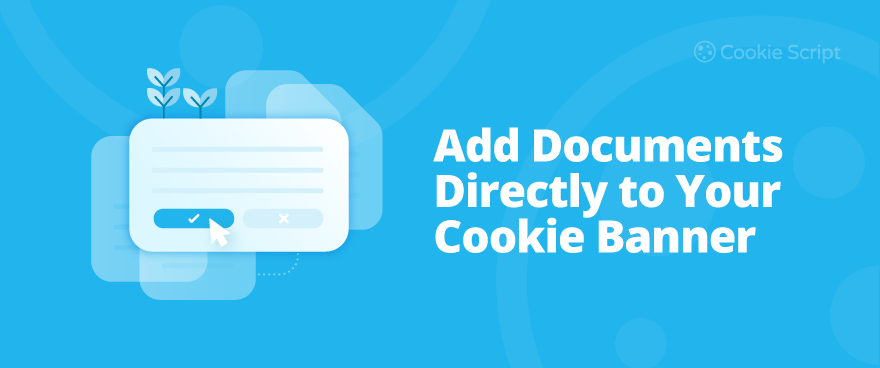
Add Privacy and Legal Documents Directly to Your Cookie Banner
Making your website more transparent for users—and more compliant with privacy laws—just got simpler. CookieScript now lets you show key legal documents like your Privacy Policy in the Cookie Banner.
Data Subject Access Requests (DSARs): Mastering the Fulfillment Process
If someone asked to see all the data your company has on them, would you be ready? That’s what a Data Subject Access Request (DSAR) is—and with privacy laws tightening, being prepared isn’t just smart, it’s the law.
Kid-Safe Online: COPPA, GDPR-K and Age Verification
Kids are online a lot—maybe more than we’d like to admit. Games, apps, school platforms... it’s all part of everyday life now. But here’s the catch: their personal data is often collected in ways most parents never notice. That’s where laws like COPPA and GDPR-K come in.
Publisher Monetization 2025: Compliance, Consent & Paywalls
For publishers, 2025 isn’t business as usual. With data privacy rules tightening and third-party tracking on shaky ground, many are rethinking how to keep their content free and their operations sustainable.
The ROI of Trust: How Proactive Consent Management Drives Business Growth in 2025
A well-optimized CMP could deliver much more than just compliance with privacy laws. Learn how proactive consent management can build customer trust, drive business growth, and increase the ROI.
Privacy-Enhancing Technologies & The Future of Consent
What are Privacy-Enhancing Technologies (PETs)? Read about the benefits of PETs and the future of consent.

Biometric Data: Heightened Consent & Privacy Implications
More websites now use things like facial recognition or fingerprint login, but that convenience comes with serious privacy questions. Biometric data is personal in a way most other data isn’t—and laws like the GDPR, CCPA, and BIPA treat it with extra care.
Google Privacy Sandbox
Initially, Google Privacy Sandbox was designed to replace Third-Party Cookies. When Google officially abandoned its cookie deprecation plan in 2024, is the Privacy Sandbox still actual?
New to CookieScript?
CookieScript helps to make the website ePrivacy and GDPR compliant.
We have all the necessary tools to comply with the latest privacy policy regulations: third-party script management, consent recording, monthly website scans, automatic cookie categorization, cookie declaration automatic update, translations to 34 languages, and much more.